
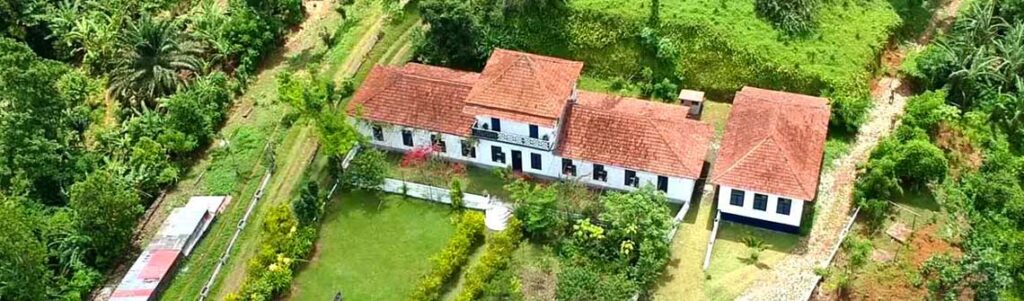
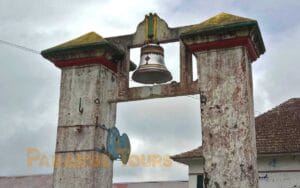
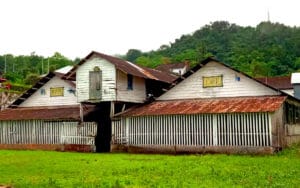
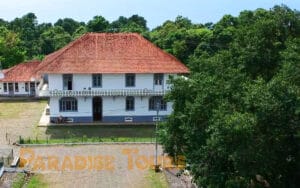
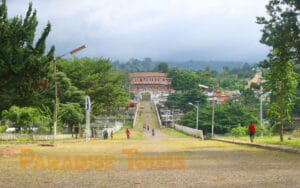
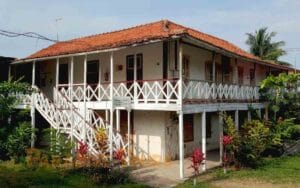
The word “Roça” is pronounced “raw-sa.” It is equivalent to “Fazenda” in Brazil and “Hacienda” in Spanish-speaking countries. During the 19th and 20th centuries, when São Tomé was a major producer of cocoa and coffee beans, there were up to 150 roças and their dependencies in operation on the island.
Roças were farms established by the Portuguese, usually with centralized management, dedicated to cultivating specific crops, such as sugarcane in the 16th century and cocoa and coffee from the 18th century onward.
The largest roças could employ thousands of workers and included churches, hospitals, and railway systems. Workers initially included slaves from Central Africa, who later became contracted laborers (contratais, serviçais) after the abolition of slavery. Following São Tomé’s independence in 1975, Portuguese landowners abandoned the farms, and the local government distributed small plots of land to those residing there.
The term “roça” has multiple definitions, including:
A farm and its general location
A privately owned plantation, regardless of size
A centralized production system
When referring to a roça by name, it typically describes the physical location. Since some roças are extensive and have dependencies, specificity is key:
Example conversation:
“Where are you going?”
“I’m going to the roça.”
“Which one?”
“Roça Agostinho Neto to visit my uncle, then to the dependence of Roça Ponta Figo to meet my friend.”
Among Santomeans, “roça” can also refer to a small cultivated land plot, which locals often visit on weekends.
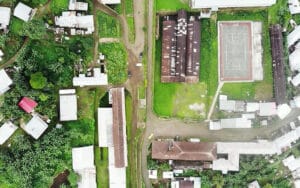
The term “roça” can also describe an entire centralized agricultural production system, which included urbanized areas, plantation zones, and shipping infrastructure.
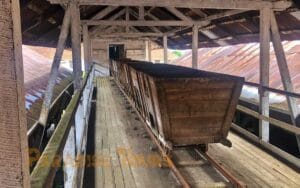
The largest roças were interconnected by railways, transporting workers in the morning, cocoa fruits to processing centers, and dried cocoa beans to shipping ports later in the day.
Urbanized area: Offices, warehouses, production facilities, housing for managers, administrative employees (Portuguese and Forros), and workers.
Plantation area: Cocoa and coffee trees, storage, processing buildings, and housing for laborers.
Shipping port area: Loading docks, storage, and administrative buildings.
After independence, production declined, and many infrastructures fell into disrepair. Former employees suddenly became small-scale entrepreneurs, lacking the expertise and resources to maintain previous production levels.
Today, some roças continue operating under foreign investment (Diogo Vaz, Ribeira Peixe), while others rely on local cooperatives. Many smaller plots have been converted into family farms or small-scale cocoa and coffee production.
When exploring São Tomé, you will encounter many colonial-era buildings, some in ruins. Here are some notable roças:
North Road: Bela Vista, Agostinho Neto, Ponta Figo, Monte Forte, Diogo Vaz, Santa Catarina
Central Road: Bom Sucesso, Monte Café, Bombaim, São Nicolau, Nova Moça
South Road: Água Izé, São João das Angolares, Porto Alegre
We offer a guided tour of the main roças in the northern area. [See details here.]
Some roças have been restored and transformed into tourism sites:
Roça Santo Antonio – A charming hotel with a swimming pool in a lush setting.
Roça Monte Forte – An agro-tourism plantation offering traditional meals and lodging. [Visit: www.rocamonteforte.com]
Roça São João das Angolares – Renowned chef João Carlos Silva transformed this roça into a gastronomic retreat with an artistic atmosphere. [See our Gastronomic Excursion.]
Roça Diogo Vaz – A working cocoa farm and chocolate brand selling locally and internationally, offering tours of the cocoa production process.
Several other renovation projects are underway and will be announced upon completion.
Roças are an integral part of Santomean cultural heritage. Supporting their preservation, restoration, and sustainable development is crucial for maintaining this rich history.